For cancer treatment, aside from surgery for tumor removal and radiation therapy, chemotherapy based on genotoxins (or cytotoxins) using cisplatin/platinum-, taxane- and anthracycline- compounds is the standard of care (SOC).
These compounds intercalate with DNA and disrupt DNA Damage Response (DDR) mechanisms from repairing the DNA (so indirect DDR inhibitors, targeting DNA instead of the proteins that are involved). On chemotherapy administration, this impairment occurs in both cancer cells as well as normal cells, hence they are not targeted therapies and cause significant patient toxicity issues as well as chemoresistance.
Thompson, et al., in their new manuscript “Predicting resistance to chemotherapy using chromosomal instability signatures” (DOI https://doi.org/10.1038/s41588-025-02233-y) discuss how such genotoxin compounds lead to the development of chemoresistance, including, for example, in high grade serous ovarian cancer (HGSOC), one of the most prevalent and difficult-to-treat cancers.
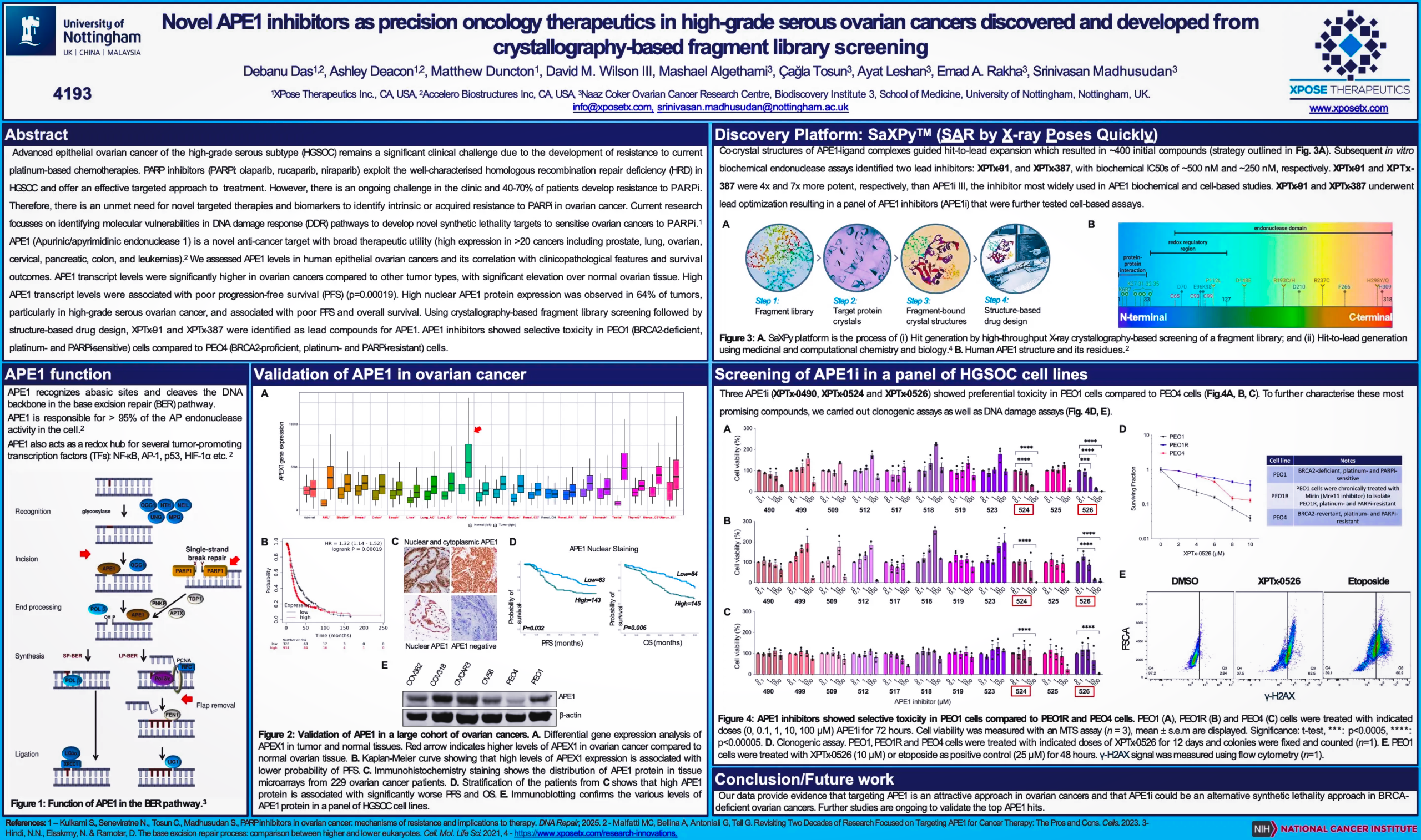
Targeted/specific DDR inhibitors are a way to either fully bypass genotoxins like these, thereby reducing toxicity from such compounds, by either being single agent inhibitors of the DDR proteins/enzymes, or in synthetic lethality (SL) paradigms, or even partially alleviating cisplatin-like DNA-intercalating compound toxicity by administering them in conjunction with reduced dosage of these genotoxins. Additionally, being able to do combinations or SL can also reduce the burden of chemoresistance by targeting multiple aspects/mechanisms simultaneously, making it harder for cells to mutate and survive to develop resistance. An example of this is our work on the discovery and development of novel inhibitors targeting the APE1 endonuclease, a key player in Base Excision Repair (BER) DDR, with early results in HGSOC, which was presented in the recent AACR 2025 conference in Chicago, “Novel APE1 endonuclease inhibitors as precision oncology therapeutics in high grade serous ovarian cancers discovered and developed from crystallography-based fragment library screening” (https://aacrjournals.org/cancerres/article/85/8_Supplement_1/4193/758632).